FUKUOKA, JAPAN

Fukuoka First Visit: Hakata or Tenjin and a Paced City Plan

Hakata or Tenjin? Choose a base around the days you want to have.

Use Hakata for a station-focused stay or Tenjin for shopping and café time. Add Old Town, Ohori or the waterfront selectively, with breaks and room for a change of plan.
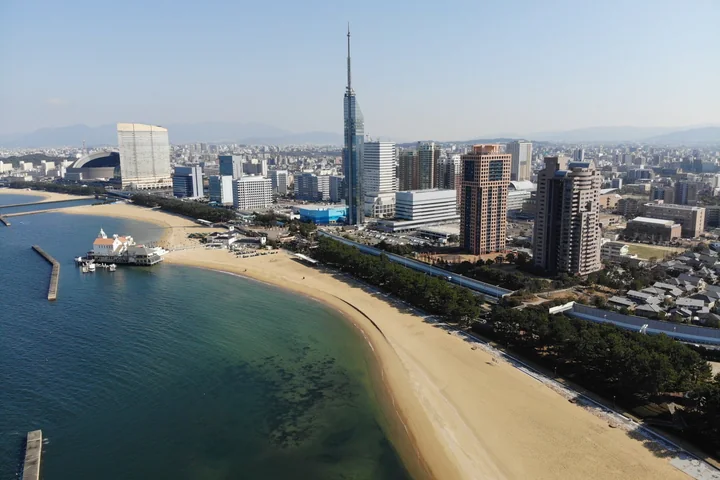
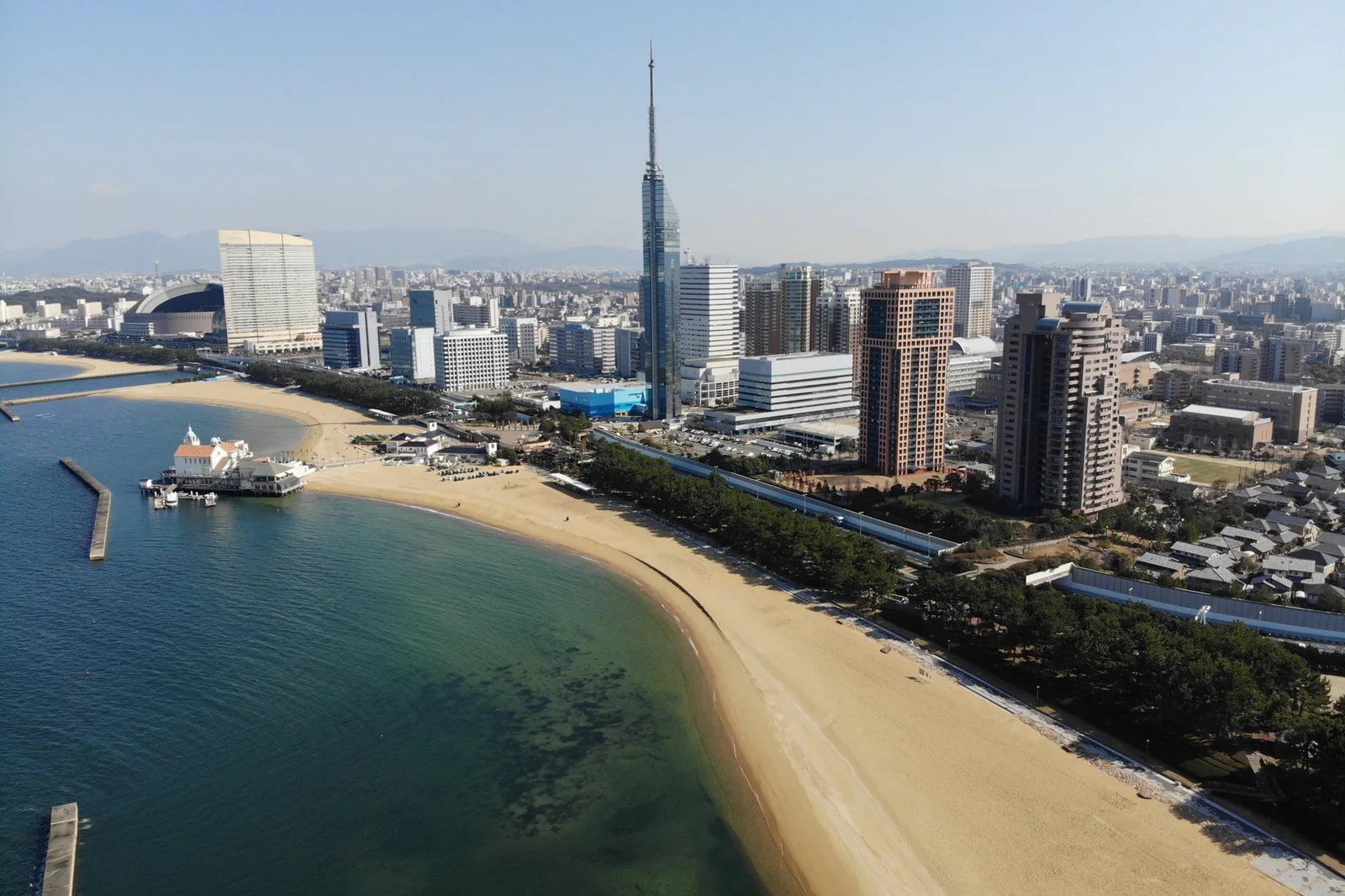
Fukuoka Tower and the curved Seaside Momochi beach beside city buildings
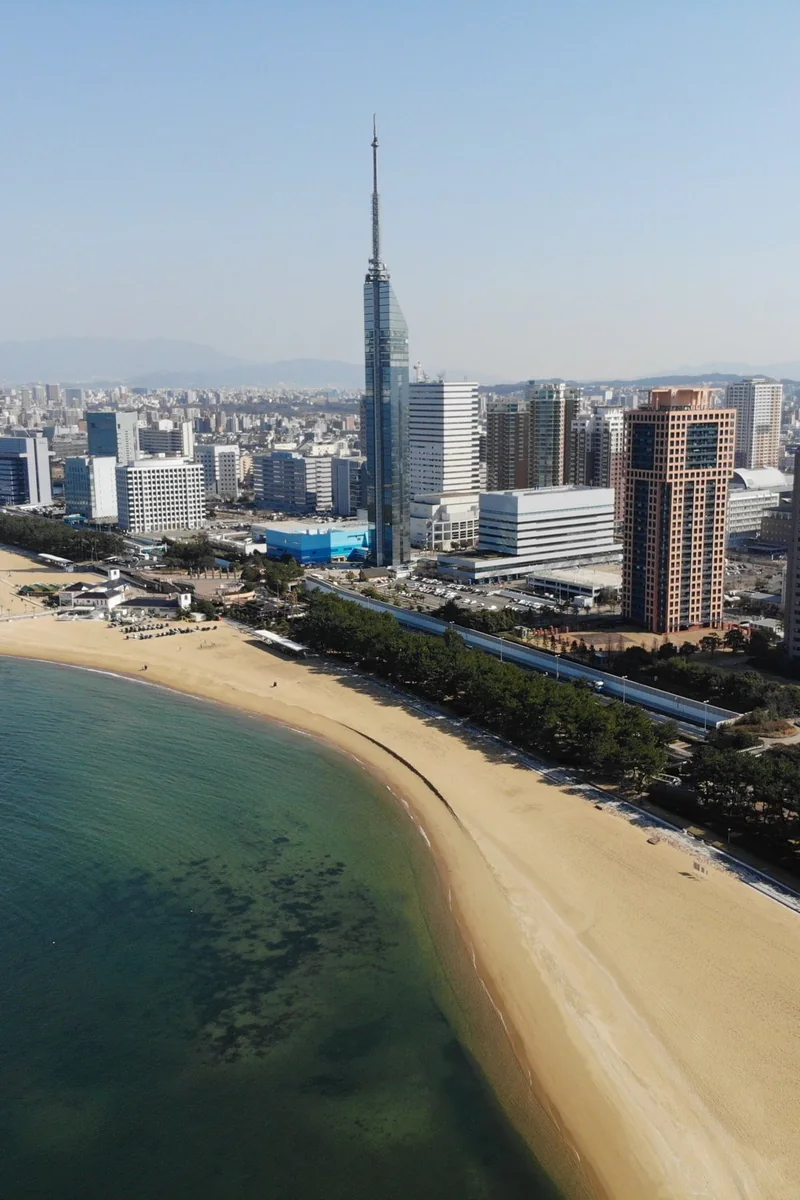
Portrait crop of Fukuoka Tower above the Seaside Momochi beach and waterfront
AT A GLANCE

Know the essentials before choosing the details.

A useful destination snapshot for a first planning pass.

Ideal stay
Start with 3 full city days; add time for a slower pace or a separately planned Kyushu stay
Best months
Compare spring or autumn for a park-heavy visit; choose dates from your actual priorities and forecast
Main airports
Fukuoka Airport; check the exact arrival on your ticket before choosing a hotel route
Currency
Japanese yen (JPY)
Pace
Flexible
Relative cost
Wide range
Languages
Japanese; check language assistance with the hotel, venue or restaurant you choose
Best for
Food interests, neighbourhood browsing, city history and a measured start or finish to a Kyushu journey

Why this destination works

Choose Hakata when repeated departures from Hakata Station shape your stay; compare Tenjin when shopping, cafés and the Nishitetsu side of your onward plan matter more. A district name is only a first filter: check the hotel entrance against the station or activity you will actually use.

For a first city stay, our starting framework is three full days: one for Hakata and its older streets, one for Tenjin, and one for a park or waterfront priority. This is an editorial planning choice, not a required stay or a promise to visit every place below.

Choose the base by the journeys you will repeat
BaseChoose it forCheck first
Hakata Station districtHakata rail departures and station-area mealsExact entrance, exit and luggage route
TenjinShopping, café breaks and Nishitetsu plansWhich station or terminal you need; street noise
Nakasu-KawabataKawabata arcade and Kushida-area interestsRoom position, evening surroundings and return route
Ohori / RopponmatsuPark and art-focused daysJourneys back to central dining and onward departures

Photographs show historical conditions, not current access, weather or available facilities. Waterfront source: Fukuoka Skyline of Seaside Momochi by Nryate, 24 July 2021, CC BY-SA 4.0. Desktop hero, portrait hero and Momochi card are centre-cropped, resized and converted to WebP by Flying Getaway; these derivatives remain licensed under CC BY-SA 4.0. No AI generation or scene alteration.

Additional historical photographs: Nichika Sakurai (published 2023-05-28); Roméo A. (published 2021-08-02); Winged Jedi (published 2023-10-31); Fumiaki Hayashi (published 2025-11-09). Unsplash License. Cropped, resized and converted to WebP by Flying Getaway; no scene alteration. Photos do not establish current access, opening, weather or services.

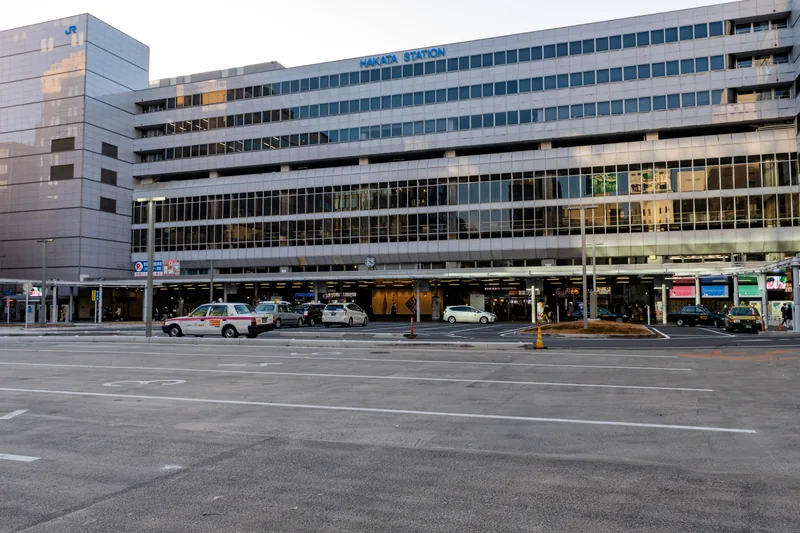
Hakata Station Chikushi Gate (8 January 2023), SuFlyer / Wikimedia Commons, CC0 1.0. Cropped and resized to WebP. Photographer · Source · License

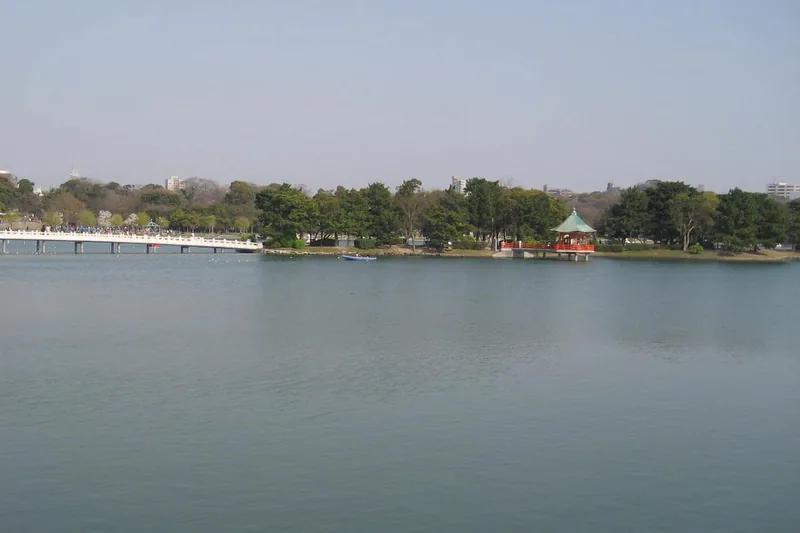
Ohori Park, Fukuoka (4 April 2008), Masgatotkaca / Wikimedia Commons, CC BY-SA 3.0. Cropped, resized and converted to WebP; this adaptation is distributed under CC BY-SA 3.0. Photographer · Source · License

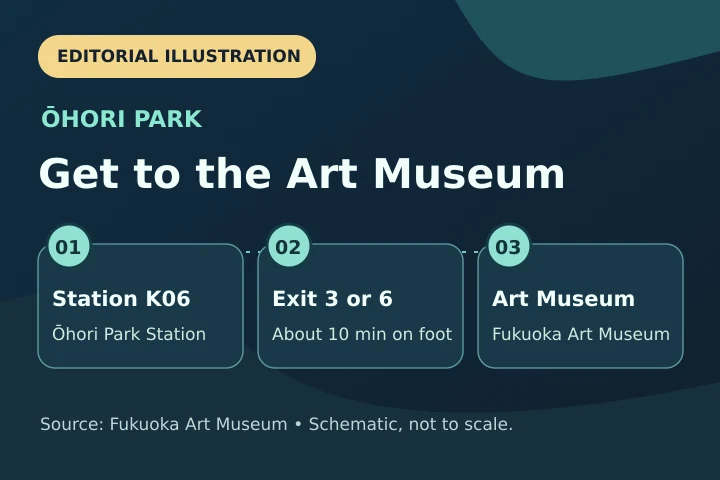
The Nakasu-Kawabata base, Tenjin shopping-pause and Fukuoka Art Museum access cards use original editorial illustrations by Flying Getaway, not documentary photographs. The museum access schematic follows the Fukuoka Art Museum official access guide: Ōhori Park Station (K06), Exit 3 or 6, about ten minutes on foot. It is not to scale.
WHERE TO STAY

Choose the neighbourhood before choosing the hotel.

Start with the days that repeat. Hakata and Tenjin answer different needs; Nakasu-Kawabata and Ohori are useful comparisons for particular interests. Check the exact property and route rather than assuming every hotel in an area has the same setting.
Hakata Station’s Chikushi Gate facade and taxi forecourt in Fukuoka
Onward rail plans and station-area practicality

Hakata Station district

Make this the first comparison when your itinerary repeatedly starts at Hakata Station. Station-area dining and a return to the room between outings can be more useful than a long sightseeing checklist. Keep an Old Town visit as a deliberate outing rather than assuming the whole historic district is outside the hotel door. Hakata Station Chikushi Gate (8 January 2023), SuFlyer / Wikimedia Commons, CC0 1.0. Cropped and resized to WebP.
Check which side of the station, the usable exit and the luggage route. A station-area address does not establish a short, quiet or step-free approach.
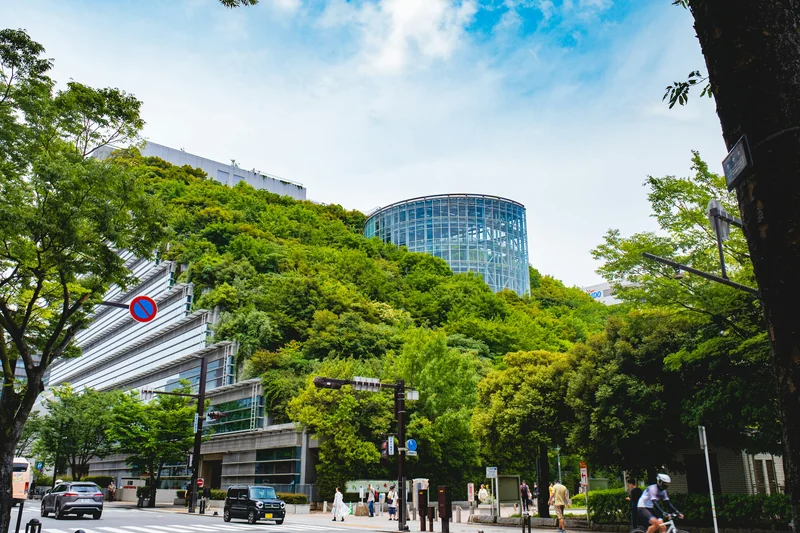
A green terraced building with a rounded glass facade beside a street in Tenjin
Shopping, cafés and a Tenjin-centred onward plan

Tenjin / Nishitetsu Fukuoka side

Choose Tenjin when browsing and meals are a major part of the stay. Build a day around the underground shopping area and one nearby cultural or park stop, rather than combining all the retail districts. Check the departure point if your onward plans use Nishitetsu.
Tenjin is an area, not a single interchange. Compare the exact street, station and room position; nightlife and traffic vary by block.
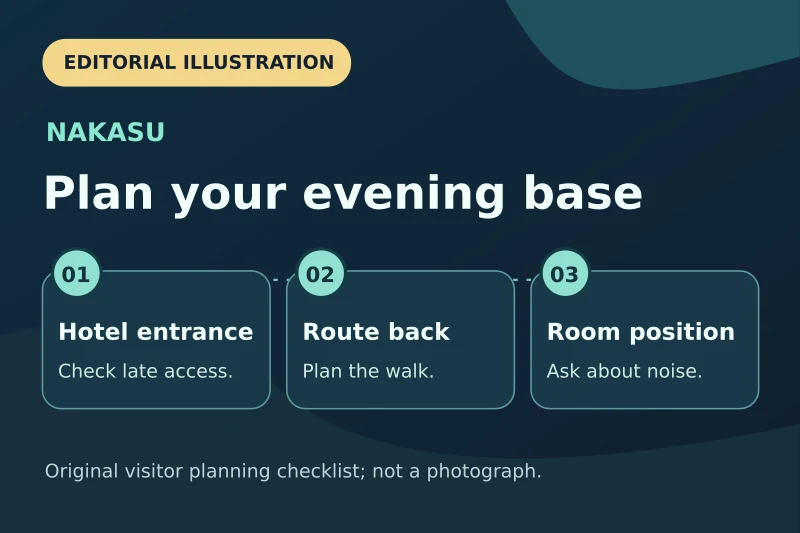
Illustrated checklist for choosing a Nakasu base: check the hotel entrance, plan the return route and ask about room noise.
Kushida Shrine, the arcade and evening interests

Nakasu-Kawabata

Compare this base when the Kawabata shopping arcade and Kushida-area visit are central to your plans. A daytime look at the streets helps you assess the setting before deciding whether you also want to spend the evening there. Editorial illustration by Flying Getaway; not a documentary photograph.
Nakasu and Kawabata should not be treated as identical hotel environments. Ask about evening surroundings, room position and the return route; a food-stall area is not a guarantee of a suitable dinner.
A broad view across Ōhori Park lake toward the bridge and distant red pavilion
Park time and a focused art day

Ohori / Ropponmatsu

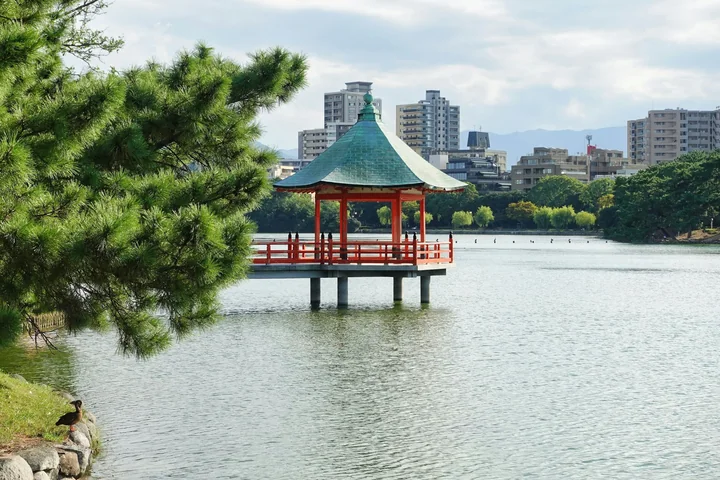
Consider the Ohori side when a park visit and the Fukuoka Art Museum matter more than being beside the busiest shopping streets. Leave time to return to your room or take a seated break instead of extending every park walk. Ohori Park, Fukuoka (4 April 2008), Masgatotkaca / Wikimedia Commons, CC BY-SA 3.0. Cropped, resized and converted to WebP; this adaptation is distributed under CC BY-SA 3.0.
Compare the exact property-to-station route and your central dining or departure plans. Proximity to a park does not verify quietness, accessible rooms or the availability of lifts on your route.
SIGNATURE EXPERIENCES

Build days that make geographic sense.

These are six choices, not six required bookings. Combine a nearby pair when it suits your energy, or choose one main outing and a long break. Recheck the operator’s notices before visiting any paid, timed or weather-sensitive facility.
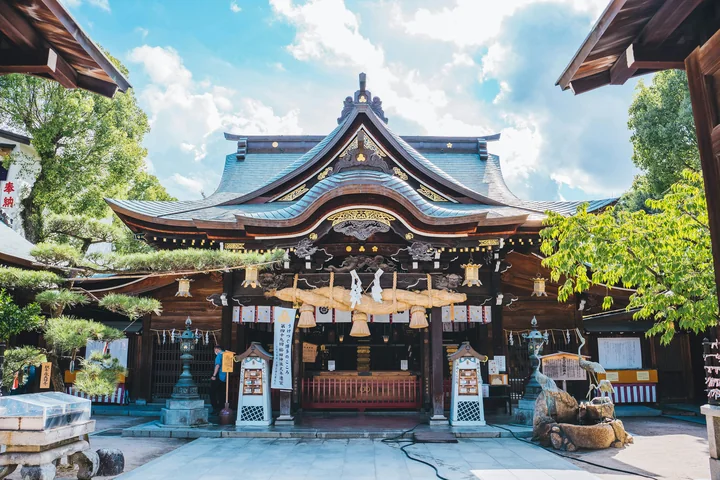
The ornate facade of Kushida Shrine, with a large braided rope above the entrance
Culture

Hakata Old Town, with a selective shrine or temple visit

Choose a small part of Old Town instead of trying to complete the city’s full shrine-and-temple course. Tochoji or Jotenji can be a starting interest; add time to read signs and appreciate the setting. Kushida Shrine and the Kawabata arcade form another focused pairing.
Confirm opening and visitor rules for each chosen site; a public street route does not establish access inside religious buildings.
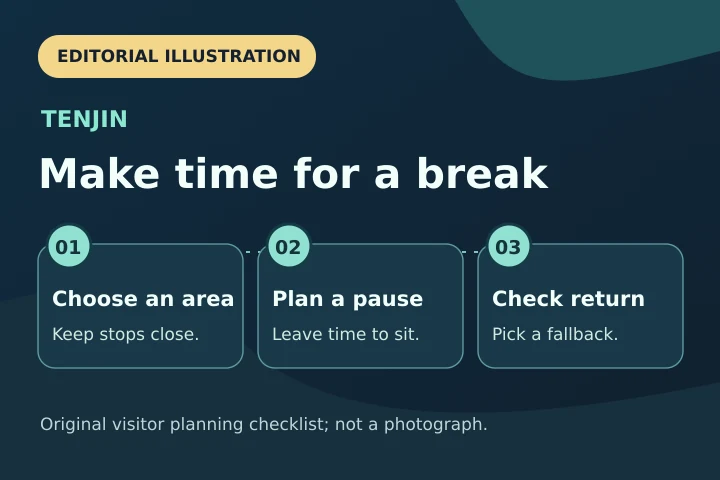
Illustrated Tenjin shopping plan: choose one area, leave time for a seated break and plan the return.
Local experience

Tenjin Chikagai and an ACROS-area pause

Make shopping an intentional interest rather than something squeezed between distant sights. Browse a chosen part of Tenjin Chikagai, then compare a pause around Tenjin Central Park and the ACROS building. A café or an early return is a valid end to the outing. Editorial illustration by Flying Getaway; not a documentary photograph.
Check current shop and facility notices. Seeing ACROS from the park does not include rooftop, garden or concert access.
A red pavilion with a green roof beside the pond at Ohori Park, framed by pine branches
Local experience

Ohori Park at the length that suits your day

Choose a pond-side segment and a place to pause. You do not need to complete a full circuit or cross every bridge to enjoy the setting. Keep walking, jogging and cycling path uses in mind, and leave the Japanese garden as a separate optional decision.
Check the park’s notices and your route needs; boats and the Japanese garden have their own operation and access conditions.
Schematic: from Ōhori Park Station K06, leave at Exit 3 or 6 and walk about ten minutes to Fukuoka Art Museum.
Culture

Fukuoka Art Museum as the day’s main indoor visit

Select an exhibition or collection interest before building the day around the museum at Ohori. A shorter park visit can accompany it, but protect enough time for galleries and a break. Check what will actually be on view rather than planning around a famous work from an old list. Editorial illustration by Flying Getaway; not a documentary photograph. Orientation only: Ōhori Park Station K06, Exit 3 or 6, about ten minutes on foot to Fukuoka Art Museum; not to scale and not a step-free route claim.
Consult the operator’s calendar, gallery-closure notices and assistance guidance; museum opening does not mean all rooms are open.
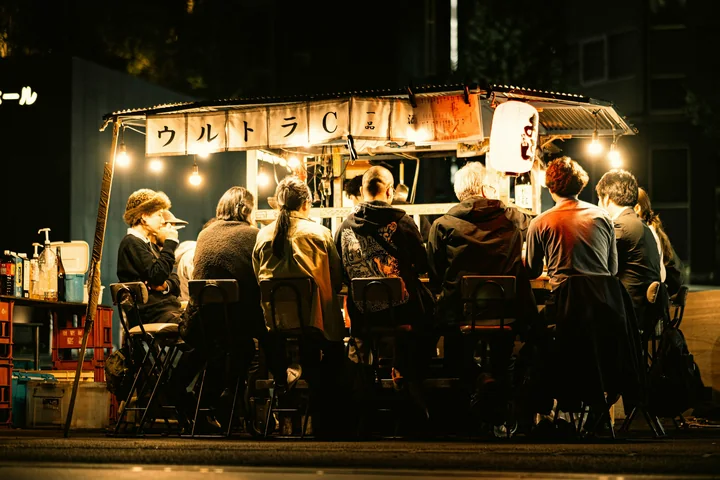
Diners seated at a brightly lit outdoor food stall in Nakasu at night
Food

A food evening with yatai as an option

Choose whether a small counter suits the group before heading out. A restaurant meal can serve the same evening priority when weather, queues, seating or dietary needs make a yatai unsuitable. Plan around one meal rather than a compulsory stall-hopping circuit.
Check the selected stall’s own updates; wind or heavy rain can cause closure. Confirm seating, ingredients, prices and payment before ordering.
Seaside Momochi beach, waterfront buildings and Fukuoka Tower in a 2021 photograph
Iconic

Seaside Momochi, with a viewpoint as a separate choice

Use the waterfront as a distinct west-side outing rather than a last stop after a full central-city day. Decide whether you want the shore setting or an additional Fukuoka Tower visit; neither needs to become an obligation. Shorten the outdoor portion if conditions are uncomfortable.
Check current waterfront and tower notices, admission and access separately. A coastal photograph does not verify swimming, tower entry or today’s conditions.
ITINERARY FRAMEWORKS

Choose a pace, then adapt it to your dates.

Three, five and seven days are adaptable city-based frameworks. Arrival and departure days may offer less usable time. Select the version that leaves room for meals, rest and the onward journey; remove stops before shortening every pause.
3 days · Essential Itinerary

Day 1 — Hakata and a short Old Town visit

Settle the station and hotel route first. Choose one shrine or temple interest, then a meal near the part of the city you are already using. Leave another Old Town visit for later if you are recovering from travel.

Day 2 — Tenjin with space between stops

Choose the shopping streets or Chikagai, and one ACROS-area or park pause. Keep the evening flexible: a restaurant is a complete plan, with a yatai visit only if the group and conditions suit.

Day 3 — Choose Ohori or Momochi

Make a park-and-art interest or the waterfront your priority. A full park circuit, museum visit and tower outing do not all need to fit this day. Keep luggage and onward departure duties outside the sightseeing plan.

Days 1–2 — Give Hakata and Tenjin their own days

Use the first two days of the three-day outline. Choose fewer stops if the arrival has taken more energy than expected.

Day 3 — Ohori and one optional gallery interest

Start with the park or the museum according to weather and your interests. Check the museum calendar first; a gallery closure can change which part of the day deserves the most time.

Day 4 — A separate Momochi outing

Choose the waterfront and decide independently about tower admission. Return to your base before adding another distant area simply to fill the evening.

Day 5 — A favourite area or one considered excursion

Keep a buffer for weather, shopping or something you wanted to revisit. Consider Dazaifu only after checking the whole outing and current site notices; an unhurried city day can be the better use of the time.

Days 1–3 — Settle into the city

Use the three-day framework, keeping Ohori and Momochi on different days if both are priorities. Do not make the third day a test of how much ground you can cover.

Day 4 — The interest you left open

Choose art, shopping, a food interest or a return to Old Town. This is room to deepen the visit rather than another fixed checklist.

Day 5 — One researched outing, or move to the next base

Consider Dazaifu after checking its current visitor information. If another Kyushu destination is the main reason for the extra nights, compare moving there rather than commuting repeatedly.

Day 6 — Protect recovery and weather flexibility

Return to an area you enjoyed or take a shorter day near your base. Keep an indoor option when wind or rain makes the waterfront less appealing.

Day 7 — Finish near the departure plan

Allow time for packing, the hotel-to-station or airport journey and the next check-in. Treat remaining sightseeing as optional; the guide does not establish a connection time.

When is Fukuoka enough of a base?

A city stay works when most priorities are within Fukuoka and an excursion is occasional. Dazaifu is one separate outing to research, not an automatic addition to every first visit. Check the current shrine and other venue information before choosing a route.

When should Kyushu have another overnight stop?

If repeated long journeys, luggage handling or early starts dominate the outline, compare a stay closer to the main interest. Choose the next destination before assuming Fukuoka can cover all of Kyushu; the number of city nights alone does not answer that question.

Adding Tokyo to a wider Japan journey

Give Tokyo its own stay and use the Tokyo trip-planning guide to compare its neighbourhoods. It is separate trip context, not a Fukuoka day trip or an included rail or flight arrangement.

ADVISOR PLANNING

Want this adapted to your dates?

Tell us your departure city, dates, traveller count, Fukuoka nights, Hakata/Tenjin preference, onward Kyushu plan, room requirements and walking or lift needs. Name your two main interests and any day you want to keep lighter.
PRACTICAL PLANNING

Remove the common sources of friction before booking.

Airports, transport and trip timing can change what counts as the best option.

AIRPORTS

Compare the complete arrival journey.

Use the arrival on your actual booking to assess the journey to Hakata, Tenjin or another base. Keep the first day light enough for luggage, check-in and a nearby meal.

Terminal choice, airline routing and the detailed airport transfer belong in your flight and arrival plan. This city guide concentrates on where to stay and how to group sightseeing.

Ask the hotel which entrance and station exit to use with your luggage. Compare the complete route rather than only the airport-to-station portion, especially if lifts, a late arrival or a taxi are relevant.

Use the airport operator’s access information for current options. No transfer is included or reserved by this guide.

AROUND THE CITY

Plan movement as part of each day.

Plan one area at a time: Hakata and Old Town, Tenjin, Ohori, or Momochi. Check the actual station pair on the Fukuoka City Subway map and ticket information; a pass is a purchase decision, not an automatic saving.

Tenjin, Tenjin-Minami and Nishitetsu Fukuoka (Tenjin) are different station names. Match the name on the route to the entrance you need. For lift-dependent travel, consult the operator’s access information and confirm current arrangements.

Check the exact lift-served station exit, street crossings, gradients, toilets and hotel room features. The subway operator describes assistance and lift routes, sometimes through adjoining facilities. Museum access information is separate from the park and hotel approach; none establishes a fully step-free holiday.
TIMING

Best time and seasonal trade-offs

Flowers, foliage and waterfront views are optional bonuses. Leave a museum or shopping alternative, and avoid building a whole day around a forecast or an assumed festival programme.
FROM THE US

Access from major US gateways

For a US-origin journey, decide how the Fukuoka stay fits the Japan arrival and departure sequence before allocating city nights. Keep the date change and recovery day separate from sightseeing ambitions.

Current airline routes and ticket conditions need their own comparison. Starting in the US does not determine passport nationality or Japan entry eligibility.

FROM THE UK

Access from major UK gateways

For a UK-origin journey, compare the whole Japan itinerary before settling on a Fukuoka base. A late arrival, an onward rail departure and a separate Tokyo stay place different demands on the city nights.

Check flights and ticket conditions separately. UK departure alone does not establish citizenship, visa eligibility or a particular connection.

CONNECTIVITY

SIM and connectivity guidance

Save the hotel address, named station and a route screenshot offline. Check device compatibility, data allowance and tethering with your chosen provider; public Wi-Fi should not be the only way to retrieve a booking or access plan.
LOCAL KNOW-HOW

Local etiquette

At shrines and temples, follow signs about worship areas and photography. At a small food stall, acknowledge staff, indicate your party size and keep luggage out of the way. Leave crowded counters promptly when finished and respect queues and other diners.
AVOID FRICTION

Common planning mistakes

  • Choosing “near Hakata” without checking the hotel entrance and station exit.
  • Treating Tenjin and every similarly named station as the same starting point.
  • Adding Momochi and a long park circuit after an already full Old Town day.
  • Making yatai the only dinner plan or assuming a stall will be open.
  • Assuming an open museum means every gallery or artwork is available.
  • Using Fukuoka as a base for repeated distant journeys without comparing a separate stay.
BOOK IN ORDER

Recommended booking sequence

  1. Confirm documents, trip dates and the Japan arrival/departure sequence.
  2. Choose the Fukuoka priorities and any separate Kyushu stays.
  3. Compare the actual hotel location, room features, full charges and cancellation terms.
  4. Check operator calendars before committing to a museum, viewpoint or timed activity.
  5. Plan the station exit, luggage and last stretch to the hotel.
  6. Recheck notices and weather near travel; retain a shorter-day alternative.
FARE CLARITY

Fare and baggage considerations

Keep flight-ticket decisions separate from the sightseeing outline. Compare baggage, connection protection, changes and cancellation terms alongside the full quoted cost.

For stays and activities, check local charges, the exact room or admission category and any service fees. No fare, saving, current availability or included excursion is promised here.

BEFORE YOU BOOK

Check entry information for your passport and itinerary.

Check Japan’s official entry guidance for the traveller’s passport, nationality, residence, purpose and length of stay. Check transit requirements separately. This guide does not confirm eligibility or provide a visa decision.
HOW FLYING GETAWAY HELPS

A useful guide becomes a plan you can actually book.

Share the Fukuoka nights, preferred base, onward Kyushu destinations, room requirements and walking or lift needs. A Flying Getaway advisor can discuss the travel request and the flight decisions that affect your stay.

Before approving any arrangement, ask what is being offered, by whom, for which dates, with which charges and cancellation terms. This guide does not confirm hotel stock, local tour provision or a package booking.

Your advisor can help with

• Matching airport, neighbourhood and schedule
• Comparing practical flight and stay combinations
• Explaining fare, baggage and supplier conditions
• Proceeding only after your review and approval

PLAN WITH CONTEXT

Ready to shape this destination around your trip?

Tell us your departure city, dates, traveller count, Fukuoka nights, Hakata/Tenjin preference, onward Kyushu plan, room requirements and walking or lift needs. Name your two main interests and any day you want to keep lighter.
DESTINATION FAQS

Clear answers before you travel.

Practical questions based on common planning decisions.

Is Hakata or Tenjin better for a first Fukuoka stay?

Choose Hakata when repeated Hakata Station departures drive the plan. Compare Tenjin when shopping, cafés and the Nishitetsu side are more relevant. Check the exact hotel and usable exit before treating either as the easier base.

How many days should I allow in Fukuoka?

Three full days is our editorial starting framework, not a minimum. Add time for a slower pace, a museum interest, an optional excursion or a separate Kyushu stay. Arrival and departure days may be less useful for sightseeing.

Must I eat at a yatai?

No. Treat a yatai as an optional food experience. Weather, queues, seating and dietary needs may make a restaurant more suitable. Check the stall’s updates and ask about ingredients, prices and payment before ordering.

Can I combine Ohori Park, the museum and Momochi in one day?

You may choose to, but this guide does not recommend making all three compulsory. Compare the actual routes, museum programme, weather and walking needs. Separating the waterfront from the park-and-art day leaves more room to stop.

Does this plan guarantee step-free access?

No. Check the hotel room and entrance, station exit and lifts, street crossings and each venue. The subway and museum publish assistance information, but that does not establish the suitability of every part of a whole day.

Should I use Fukuoka for all of Kyushu?

Choose the main interests first. An occasional researched outing can fit a Fukuoka stay; repeated distant journeys may justify a separate overnight base. Compare the complete hotel-to-activity journey, luggage and recovery needs, not a headline travel time.
Last Reviewed by:
Dean Williams

on

26/11/2026

Entry rules, schedules and availability may change. Confirm current information before booking.

YOUR NEXT TRIP STARTS HERE

Ready to make the trip easier?

Tell us the trip – or the problem. A travel expert will help organise the next step.

Travel ideas in your inbox

Occasional destination inspiration, useful guides and updates from Flying Getaway.

FLYING GETAWAY · Destination pages

Let’s plan your visit to Fukuoka First Visit: Hakata or Tenjin and a Paced City Plan

Talk to our travel team about flights and planning your visit.

Call Flying Getaway

Flying Getaway’s travel team is available 24/7.

Service fees explained before quotation

Basic services generally carry a USD $25 fee per service request. Any additional service charges are explained before we send your final quotation.

Any applicable airline charges are separate and will be included in the quotation before you confirm and pay.