OSAKA, JAPAN

Osaka First Visit: Choose a Base and a Manageable Plan

Choose an Osaka base that fits your days, then leave room to enjoy them.

Compare Kita/Umeda with Minami/Namba, group nearby experiences and decide whether Kyoto needs its own stay. Start with your priorities, walking needs and available nights.
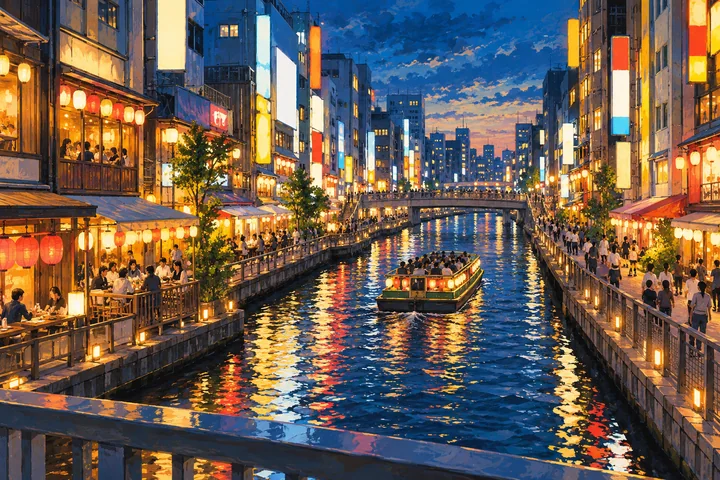
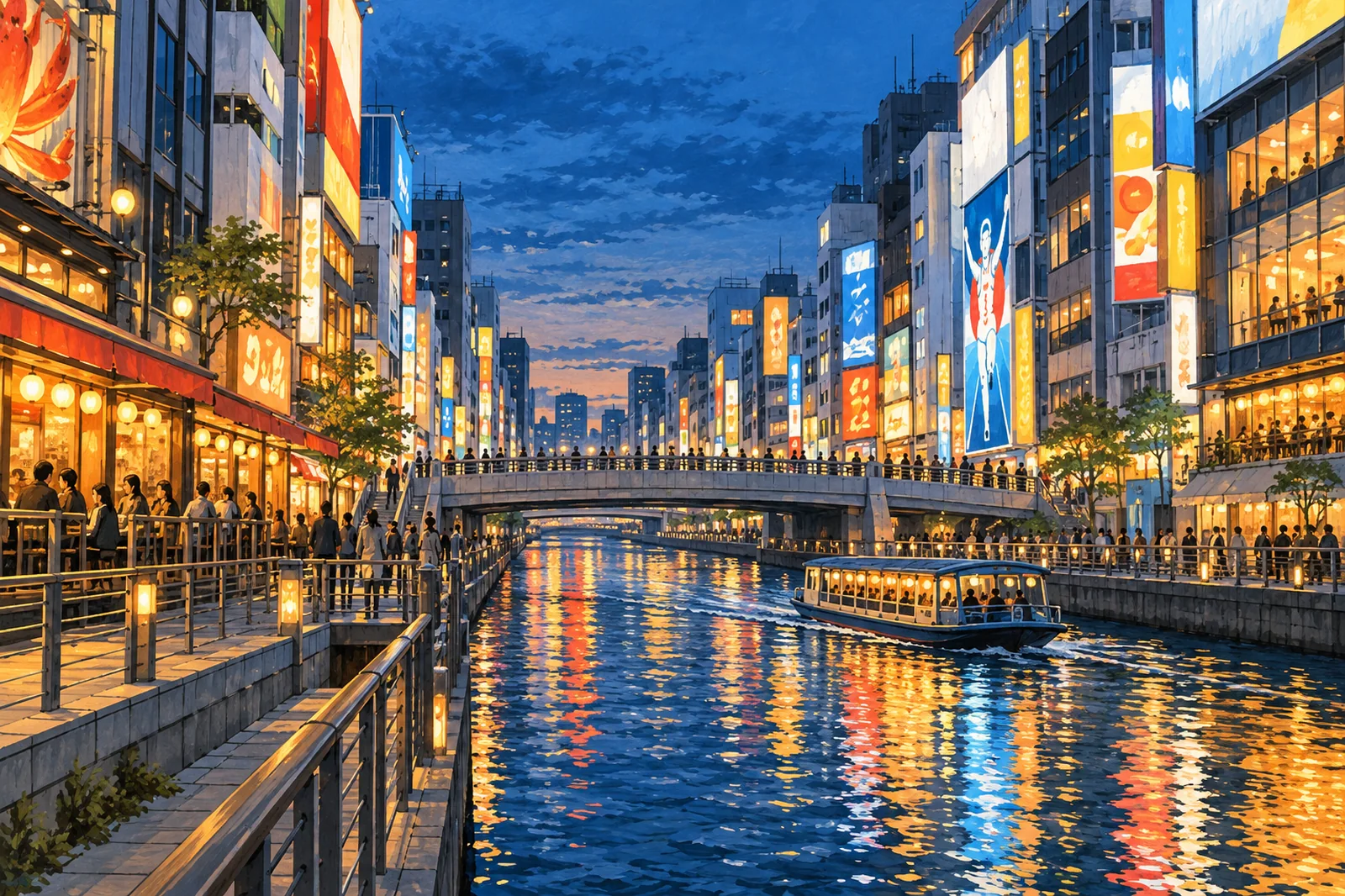
Illustration of an Osaka canal, pedestrian bridge and warm evening reflections
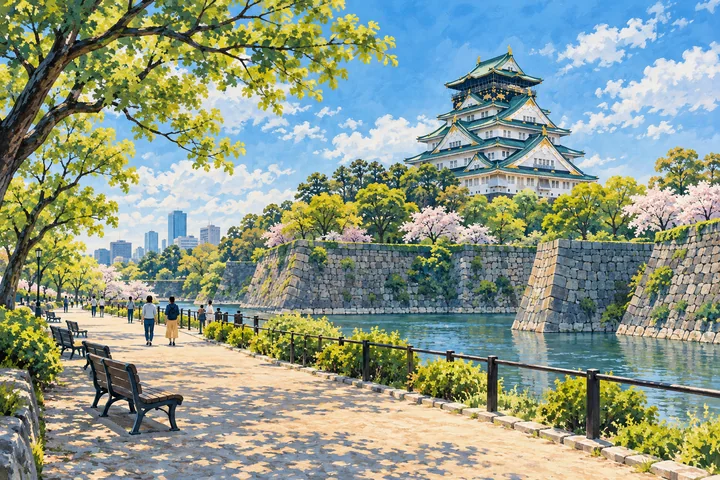
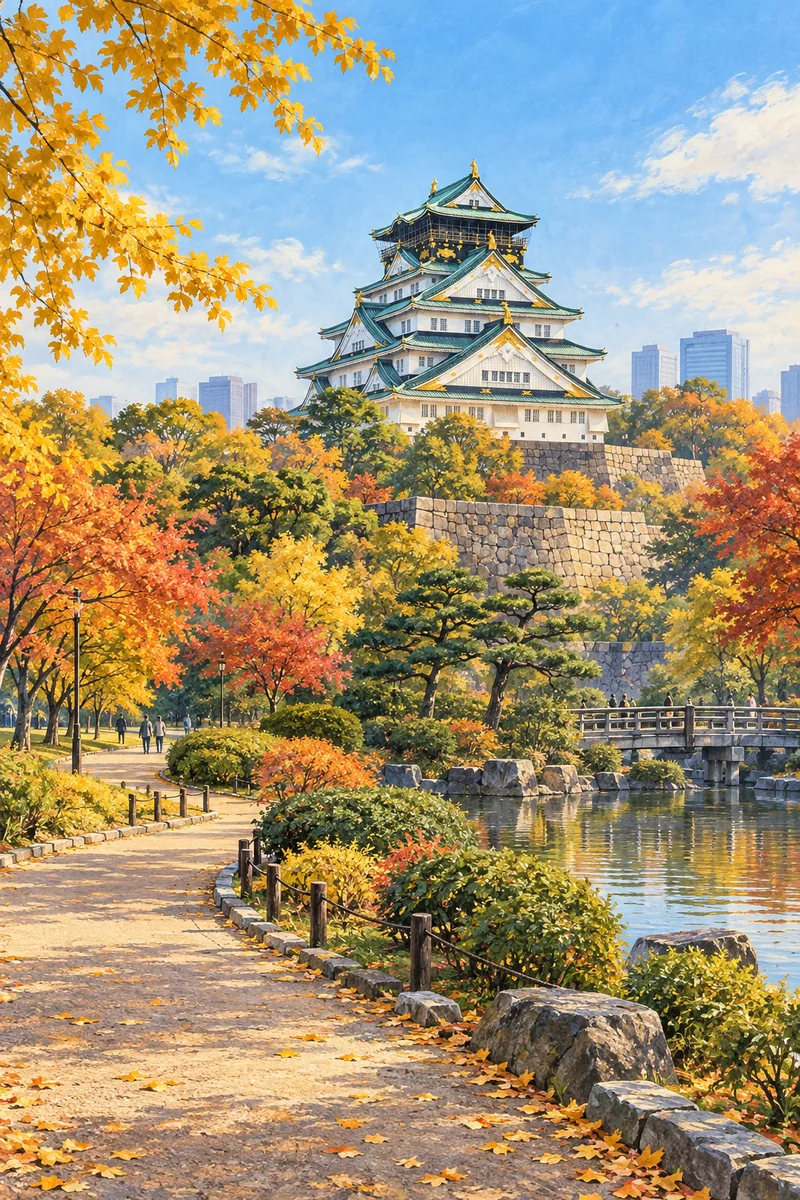
Illustration of Osaka Castle above a park path, trees and water
AT A GLANCE

Know the essentials before choosing the details.

A useful destination snapshot for a first planning pass.

Ideal stay
Planning starting point: 3 full Osaka days; add nights for rest, a dedicated attraction day or wider Kansai travel
Best months
Consider spring or autumn for an outdoor-heavy plan; conditions and crowds vary by date
Main airports
Kansai International (KIX), Osaka Itami (ITM) and Kobe (UKB); compare the airport on your quote with the journey to your stay.
Currency
Japanese yen (JPY)
Pace
Flexible
Relative cost
Wide range
Languages
Japanese; verify language assistance with each hotel, venue or service
Best for
Travellers who want food, city neighbourhoods, culture and a flexible Kansai stay

Why this destination works

For a first visit, choose Kita/Umeda if the Osaka Station area and onward rail plans suit your days, or Minami/Namba if you want food streets and evening entertainment close to your base. Neither is automatically best: compare the exact hotel entrance, station exit and places you will actually visit.

Our planning starting point is three full sightseeing days with one main area each day. Add nights for a slower pace, a dedicated attraction day or Kyoto; this is an adaptable framework, not a minimum stay or a promise to cover everything.

Choose a base by the journey you will repeat
BaseUseful whenCheck before booking
Kita/UmedaNorthern city time and departures from Osaka/Umeda stations matter mostWhich station, exit and walking route your hotel actually uses
Minami/NambaDotonbori, food and evening plans are prioritiesStreet noise, crowds and the return walk to the exact address
Yodoyabashi/HommachiYou prefer a central compromise between north and southYour nearest line and whether daily transfers offset the location
Tennoji/AbenoSouthern Osaka and park breaks feature in your planStation exits, crossings and room/location suitability

The images in this guide are AI-generated editorial illustrations. They convey the named areas and experiences; they are not photographs or proof of current layouts, access, weather or hotel facilities.
WHERE TO STAY

Choose the neighbourhood before choosing the hotel.

Compare the journey you will make repeatedly, not just the distance to a famous landmark. These are area tradeoffs; no hotel stock, price, room feature or quietness is guaranteed.
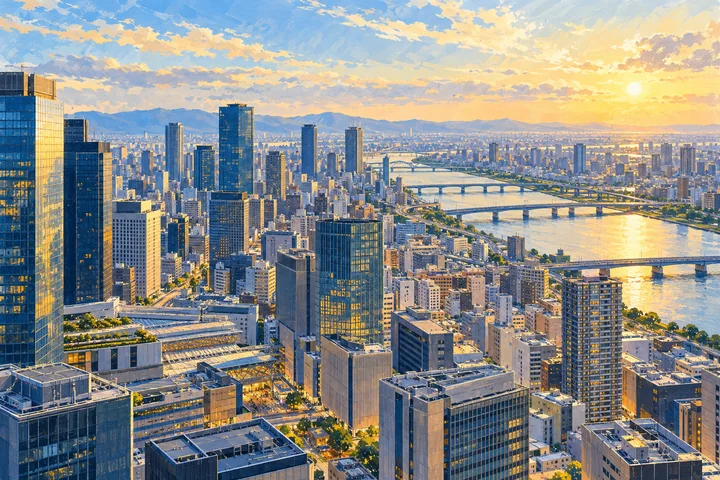
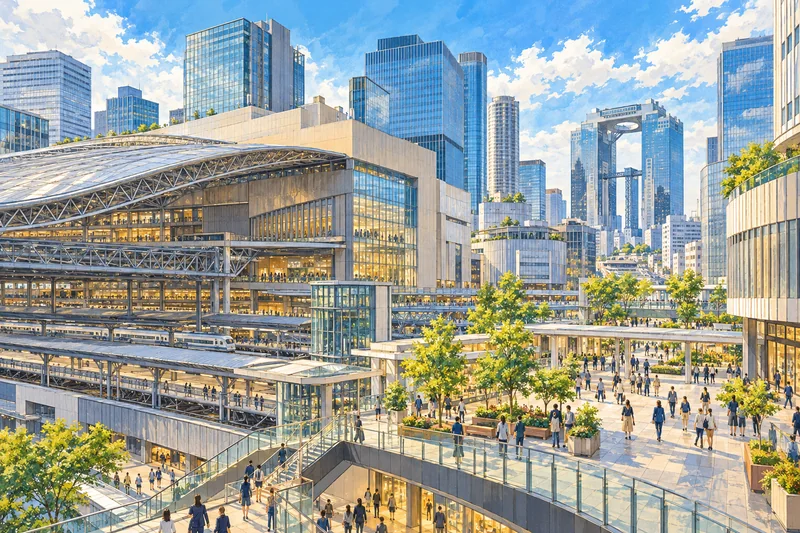
Illustration of the Osaka Station district with a pedestrian plaza and modern buildings
Osaka Station-area priorities and northern city days

Kita / Umeda

The Osaka/Umeda cluster offers a practical starting point when your plans repeatedly use that part of the city. Build a northern day around the station district and one selected view rather than crossing Osaka between every stop.
The station complex is large. Check the precise operator, exit and hotel approach; a station-area label does not guarantee a short or simple walk.
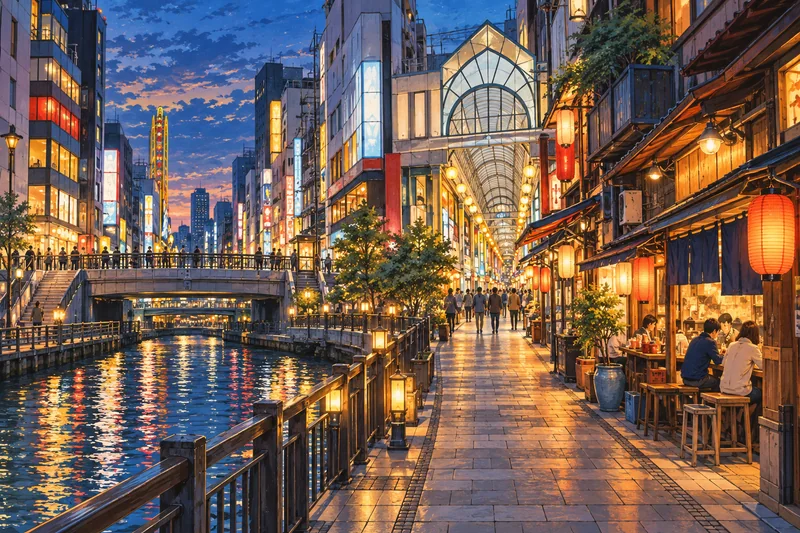
Illustration of Minami evening streets, a shopping arcade and canal-side lights
Food streets, shopping and evening atmosphere

Minami / Namba / Shinsaibashi

This is a useful comparison base when Dotonbori and Minami evenings are central to your trip. Plan a nearby meal and a modest walk so the first evening does not become a second full sightseeing day.
Busy streets and late activity may suit some travellers more than others. Check the exact address, room position and access route with the hotel.
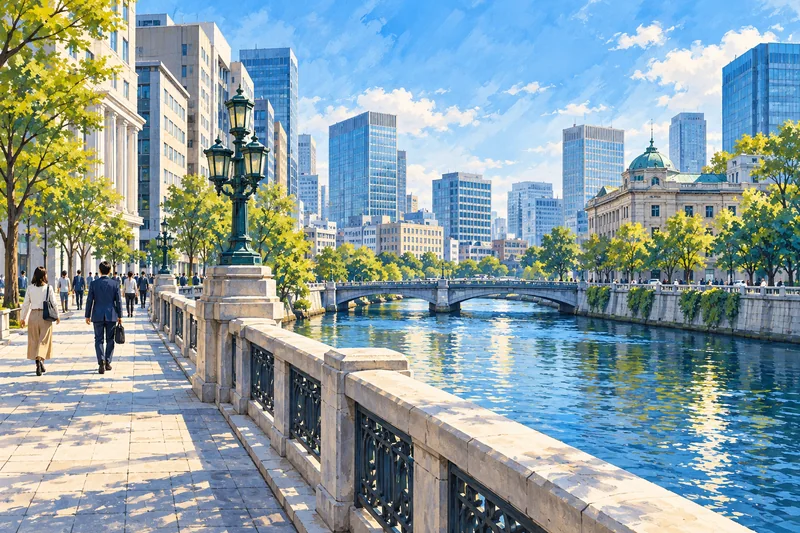
Illustration of a central Osaka river bridge and tree-lined office streets
A central compromise and Nakanoshima time

Yodoyabashi / Hommachi

Consider this area when you want to balance north and south rather than sleep beside one entertainment district. Nakanoshima offers a riverfront option to include in a lighter day.
A central map position does not remove transfers. Compare the nearest line, evening plans and the last walk from the station before deciding.
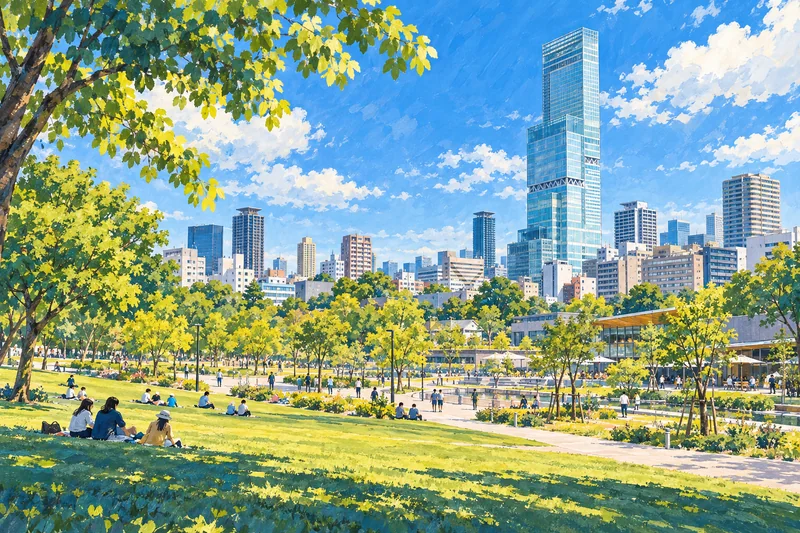
Illustration of a Tennoji park lawn with a tall glass tower in the background
Southern Osaka and room for park breaks

Tennoji / Abeno

Consider a southern base if Tennoji Park and nearby districts feature in your plan. Use the park as a possible pause rather than assuming every day needs another major attraction.
Check crossings, station exits and the precise hotel location. Travelling north repeatedly may outweigh the benefits for a different itinerary.
SIGNATURE EXPERIENCES

Build days that make geographic sense.

Choose the experiences that matter to your group, then cluster nearby stops. The six ideas are alternatives to combine selectively, not six compulsory bookings. Opening, access and ticket conditions must be checked for the actual date.
Illustration of a Dotonbori-inspired canal view from a bridge at dusk
Iconic

Dotonbori and a Minami evening

Choose a short canal-side walk and one meal as an introduction to Minami. Add nearby Shinsaibashi only if your group still has energy; the aim is an enjoyable evening, not a circuit of every sign and shop.
Check any boat, show or restaurant separately. Busy bridges, station exits and riverwalk access require their own route check.
Illustration of Osaka Castle above stone walls beside a park path and benches
Culture

Osaka Castle Park, with an optional museum visit

Treat the park and paid museum as different decisions. A park-focused outing can leave time to sit and enjoy the setting; visitors interested in the museum should allow for its separate access, admission and internal circulation.
Use the current museum operator guide and assistance information. Do not rely on older park brochures for museum prices/hours; confirm stroller and lift arrangements directly.
Illustration of layered Osaka buildings and river views in late-afternoon light
Iconic

Kita / Umeda and a selected city view

Build one northern-city day around Umeda rather than repeatedly passing through it. If a viewpoint matters, choose one and keep the remainder of the area visit flexible. A rooftop view is optional, not essential to enjoying the district.
For Kuchu Teien, check the operator’s dated hours/maintenance notices, weather conditions and accessible approach. Standard opening hours are not a guarantee for every date.
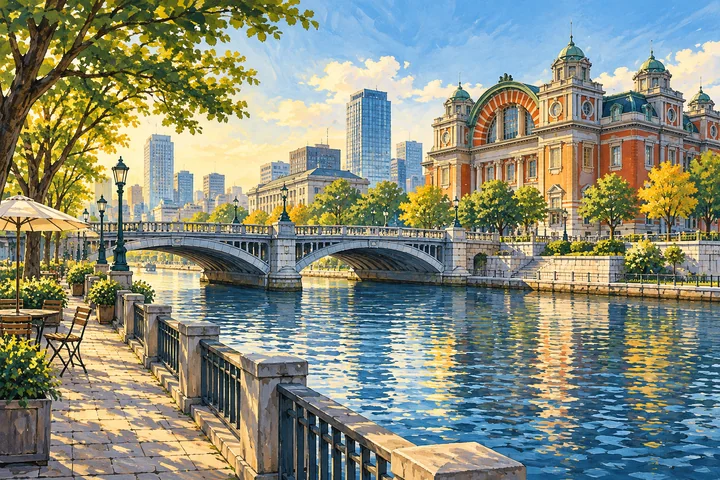
Illustration of a Nakanoshima-inspired civic building, bridge and riverside path
Local experience

Nakanoshima riverfront and a lighter cultural stop

Use a riverside walk, civic architecture and a seated break to slow the trip down. Choose the length that suits the weather and your group; an exhibition or indoor visit is a separate option to verify.
Confirm any museum/exhibition opening and admission independently. Flowering and outdoor conditions vary; do not assume every riverfront route is suitable for every mobility need.
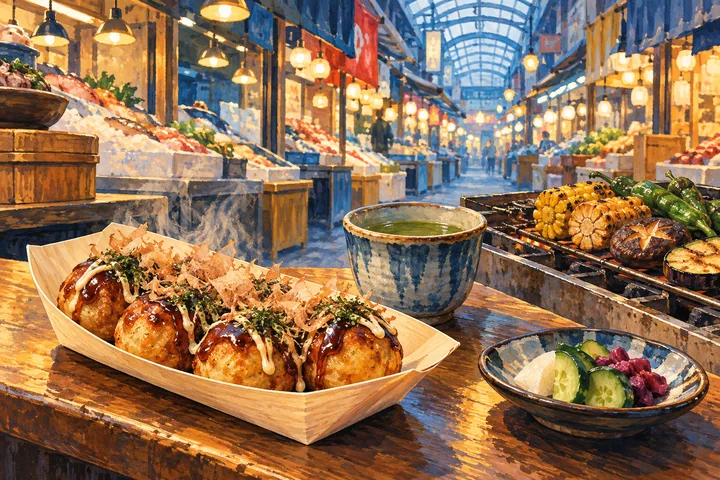
Illustration of takoyaki, tea and vegetables with a covered market in the background
Food

Kuromon food and market browsing

Choose a small number of traders rather than an ambitious tasting checklist. Ask what is in the food, where to eat it and how to dispose of packaging. Keep this visit flexible enough to skip queues or foods that do not suit the group.
Individual shop hours and serving arrangements vary. Dietary, allergy and access needs must be checked directly; no blanket market-wide assurance is offered.
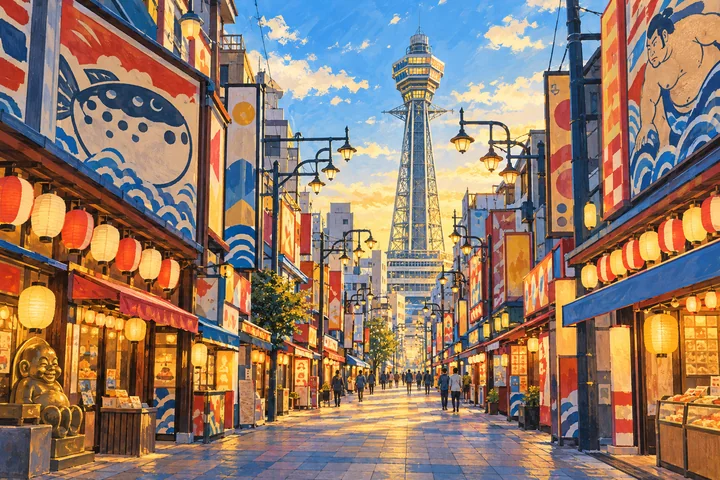
Illustration of a Shinsekai-inspired shopping street with Tsutenkaku in the distance
Local experience

Tennoji Park and an optional Shinsekai walk

Use Tenshiba as a park break, then decide whether to continue towards Shinsekai’s streets and Tsutenkaku setting. It is equally reasonable to stop after the park; a tower visit, zoo or other attraction is a separate choice.
Check the actual route and crossings. Tenshiba access notes do not establish an entirely step-free route to Shinsekai or guaranteed tower access; verify ticketed activities with their operators.
ITINERARY FRAMEWORKS

Choose a pace, then adapt it to your dates.

Use these as flexible full-day frameworks after arrival. Start with one priority each day, allow meals and recovery, and remove optional stops before adding more cross-city travel.
3 days · Essential Itinerary

Day 1 — Minami, with an easy first evening

Choose Kuromon or a nearby neighbourhood walk, leave a seated break, then decide whether a Dotonbori evening suits your energy. Start later or finish earlier if recovering from travel.

Day 2 — Castle Park, with the museum as a choice

Make the park the main outing. Add the museum only after checking access and current arrangements. Keep any second stop nearby and optional; shorten the day if weather or walking demands it.

Day 3 — Kita / Umeda, or a lighter riverfront day

Choose the northern city district and one viewpoint, or favour Nakanoshima and a longer break. Do not force both into a fixed timetable. Keep the evening close to your base.

Day 4 — Tennoji at your own pace

Use the park and nearby southern-city area as a separate day. Add Shinsekai only if the route suits; a cafe or early return can be the better choice.

Day 5 — Protect a flexible day

Revisit a favourite area, choose one verified indoor activity, or consider a focused Kyoto visit after comparing the whole journey. Keep this day available for weather or recovery rather than filling every hour.

Day 1 — Minami, with an easy first evening

Choose Kuromon or a nearby neighbourhood walk, leave a seated break, then decide whether a Dotonbori evening suits your energy. Start later or finish earlier if recovering from travel.

Day 2 — Castle Park, with the museum as a choice

Make the park the main outing. Add the museum only after checking access and current arrangements. Keep any second stop nearby and optional; shorten the day if weather or walking demands it.

Day 3 — Kita / Umeda, or a lighter riverfront day

Choose the northern city district and one viewpoint, or favour Nakanoshima and a longer break. Do not force both into a fixed timetable. Keep the evening close to your base.

Day 4 — Tennoji and a slower afternoon

Choose the park and one nearby interest; keep time for meals and a return to the hotel.

Day 5 — Focused Kyoto time, if it serves the trip

Choose a Kyoto area before choosing trains. If several Kyoto days matter, compare relocating for a separate stay instead of repeated commuting.

Day 6 — One special interest or a return visit

Use the day for one personally important museum, neighbourhood, shopping or food interest. A major ticketed attraction needs its own operator research and is not assumed included.

Day 7 — Leave room to finish well

Keep departure logistics and any onward hotel change separate from sightseeing ambitions. Revisit a favourite only when it fits the actual transport and luggage plan.

Osaka base or a separate Kyoto stay?

An Osaka base can reduce hotel changes when Osaka evenings and a limited Kyoto visit suit the trip. If several Kyoto mornings or evenings are central to your plans, compare an additional Kyoto stay instead of repeating the same intercity journey. This is a planning tradeoff, not a rule based on a fixed number of nights.

The Kyoto City access guide lists different Osaka departure stations and Kyoto arrival areas. Compare hotel-to-activity travel, station access and luggage arrangements, not just a headline train time. Check luggage storage or delivery with the provider; availability is not assumed.

If Tokyo is also on your holiday

Treat Tokyo as a separate stay rather than an Osaka day trip. Use our Tokyo trip-planning guide for its neighbourhood choices and keep the two city plans distinct.

ADVISOR PLANNING

Want this adapted to your dates?

Share your departure city, dates, traveller count, Osaka nights, preferred base, room needs, walking/transport requirements and the two or three experiences that matter most.
PRACTICAL PLANNING

Remove the common sources of friction before booking.

Airports, transport and trip timing can change what counts as the best option.

AIRPORTS

Compare the complete arrival journey.

Check the airport code, terminal, arrival time and onward journey before choosing a base. Kansai, Itami and Kobe serve different flight options, so compare the complete trip to your exact hotel.

Keep the arrival day lighter, especially after a long journey. Ask the transport operator or hotel about the last stage of the route, luggage and access needs.

Before booking, compare the arrival route to the exact hotel entrance, including transfers, luggage, late arrival and walking needs. Ask the hotel which station exit and final approach suit your group.

Check the transport operator for the travel date and service changes. Protect extra time after arrival; a scheduled landing time is not a promise of a particular train or check-in time.

AROUND THE CITY

Plan movement as part of each day.

Group each day around one main area, then use official rail maps or route search for the actual station pair. Osaka/Umeda, Namba and other station complexes contain different operators and exits; allow time for the final walk.

Choose a pass only after listing the journeys you expect to take. Compare valid lines and exclusions with individual fares; this guide does not promise that a pass will save money. For lift-dependent travel, check Osaka Metro access and maintenance information.

A nearby station does not guarantee an easy hotel route. Check the exact exit, lifts, crossings, slopes, seating and accessible room features. Official route notes and Osaka Metro maintenance notices help, but route suitability must be confirmed for each traveller and each part of the trip.
TIMING

Best time and seasonal trade-offs

Treat blossoms, autumn colour and outdoor views as weather-dependent extras. Keep an indoor or shorter-day alternative and confirm current attraction notices before departure.
FROM THE US

Access from major US gateways

For travel starting in the US, settle the Japan arrival and onward sequence before allocating Osaka nights. Keep the arrival day lighter and compare a single Osaka stay with any additional Japanese city stays.

Airline schedules, connections, baggage and ticket protection need a current flight comparison. Traveller nationality and Japan entry eligibility cannot be inferred from departure in the US.

FROM THE UK

Access from major UK gateways

For travel starting in the UK, check which Japanese city you arrive in and leave from before fixing the Osaka portion. A multi-city holiday needs time for hotel changes as well as rail journeys.

Compare current flight and ticket conditions separately. Leaving from the UK does not determine passport nationality, entry permission or a particular route’s availability.

CONNECTIVITY

SIM and connectivity guidance

Arrange a working data option for maps and operator notices. Check device compatibility and the provider’s coverage before purchase; keep the hotel name/address and key route details available offline.
LOCAL KNOW-HOW

Local etiquette

Follow local signs and staff directions, keep queues and paths clear, and ask before photographing people or small premises. Check each market trader’s serving and waste-disposal arrangements rather than assuming food can be eaten anywhere.
AVOID FRICTION

Common planning mistakes

  • Choosing a hotel from a station name without checking its entrance and the usable exit.
  • Combining Castle Park, the bay, Umeda and Namba into one tightly timed day.
  • Treating a short rail journey as the whole hotel-to-activity journey.
  • Assuming a park’s accessibility applies to every museum, viewpoint or surrounding street.
  • Adding a Kyoto day without deciding what you want to see there.
BOOK IN ORDER

Recommended booking sequence

  • Confirm traveller documents and trip dates, then compare the arrival/departure sequence.
  • Choose Osaka priorities and decide whether another city needs a separate stay.
  • Compare exact hotel locations, room features, total charges and cancellation terms.
  • Reserve any date-sensitive priority only after checking the operator’s conditions.
  • Recheck transport, access and venue notices close to travel; keep the itinerary adjustable.
FARE CLARITY

Fare and baggage considerations

Before approving travel arrangements, check the full price and conditions: baggage, room type, local charges, transfers, inclusions, change/cancellation terms and any agency service fees. Avoid comparing offers that cover different things.

A sightseeing outline does not hold flights, rooms or tickets. Ask for current written options; no price, saving or availability is promised here.

BEFORE YOU BOOK

Check entry information for your passport and itinerary.

Check Japan’s official entry guidance for your passport, nationality, residence, trip purpose and length of stay before committing to non-refundable arrangements. Also check transit-country requirements and any restrictions relevant to items you carry. This guide does not determine eligibility.
HOW FLYING GETAWAY HELPS

A useful guide becomes a plan you can actually book.

A Flying Getaway advisor can help compare the base, trip length, room requirements and daily priorities alongside current booking options. Share your walking and transport needs early so the choices can be reviewed against the actual locations.

Ask for the complete quote, inclusions, supplier conditions and any service charges before approval. Assistance does not imply hotel availability, attraction access or an approved booking.

Your advisor can help with

• Matching airport, neighbourhood and schedule
• Comparing practical flight and stay combinations
• Explaining fare, baggage and supplier conditions
• Proceeding only after your review and approval

PLAN WITH CONTEXT

Ready to shape this destination around your trip?

Share your departure city, dates, traveller count, Osaka nights, preferred base, room needs, walking/transport requirements and the two or three experiences that matter most.
DESTINATION FAQS

Clear answers before you travel.

Practical questions based on common planning decisions.

Where should I stay on a first Osaka visit?

Compare Kita/Umeda for northern-city and Osaka Station-area priorities with Minami/Namba for food streets and evenings. Yodoyabashi/Hommachi and Tennoji/Abeno are alternatives. Decide from the exact hotel-to-priority journeys and access needs, not an area ranking.

How many Osaka days should I plan?

Three full days is our adaptable first-planning framework, not a requirement. Add time for rest, a dedicated attraction day or wider Kansai travel. Arrival and departure days may provide less usable time than a full sightseeing day.

Can I use Osaka as a base for Kyoto?

It can suit a trip focused on Osaka with limited Kyoto time. Compare an additional Kyoto stay if repeated Kyoto mornings or evenings matter. Include the journeys to and from stations, luggage and hotel changes rather than judging from train time alone.

Is this itinerary guaranteed to be accessible?

No. Check each hotel, station exit, lift, crossing and venue for the traveller’s needs and travel date. Official universal-tourism and transport guidance helps identify routes and limits but cannot guarantee every part of a whole itinerary.

Do I need to book all six experiences?

No. They are choices to combine selectively. Start with one main area or priority each day and keep shorter-day options. Check the current operator conditions for any activity you choose to reserve.

Does this guide confirm Japan entry permission or availability?

No. Check official entry guidance for your passport and circumstances, and request current written booking options. The guide holds no flights, rooms or tickets and makes no eligibility, price or availability promise.
Last Reviewed by:
Dean Williams

on

Entry rules, schedules and availability may change. Confirm current information before booking.

YOUR NEXT TRIP STARTS HERE

Ready to make the trip easier?

Tell us the trip – or the problem. A travel expert will help organise the next step.

Travel ideas in your inbox

Occasional destination inspiration, useful guides and updates from Flying Getaway.

FLYING GETAWAY · Destination pages

Let’s plan your visit to Osaka First Visit: Choose a Base and a Manageable Plan

Talk to our travel team about flights and planning your visit.

Call Flying Getaway

Flying Getaway’s travel team is available 24/7.

Service fees explained before quotation

Basic services generally carry a USD $25 fee per service request. Any additional service charges are explained before we send your final quotation.

Any applicable airline charges are separate and will be included in the quotation before you confirm and pay.